
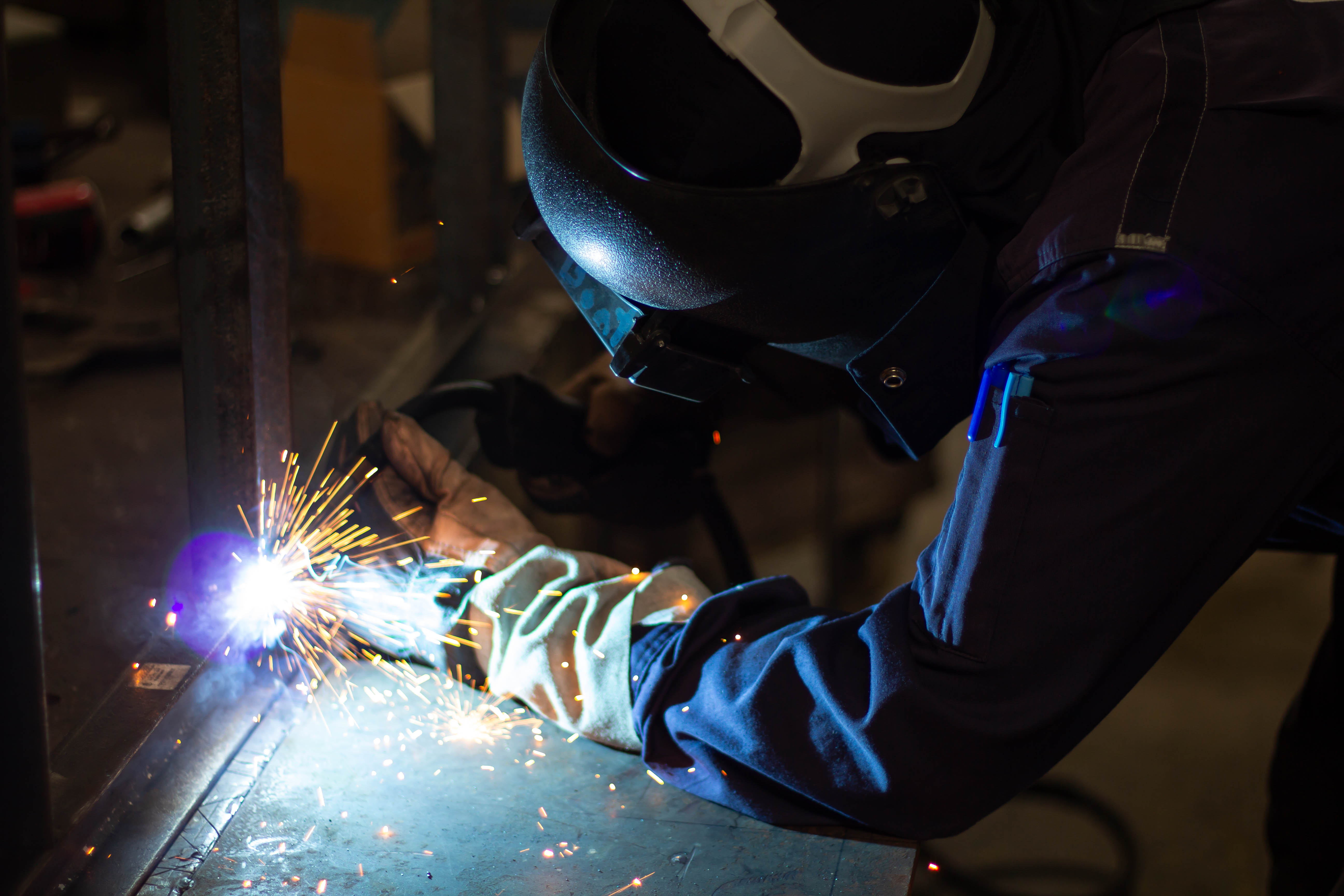
A welder arrives at a Fort Saskatchewan chemical plant for a Monday morning start. Their resume shows ten years of experience, an Alberta journeyperson certificate, and CWB certification. Procurement has already signed off. The plant manager doesn’t think twice about it. Then the inspector arrives to qualify the first weld procedure, and the welder admits they’ve never run on stainless. Their CWB ticket is for carbon steel only. By 11 AM, the welder is off-site, the inspector is rebooked, and the project is two days behind. The total cost runs to $9,400 in standby labour, inspection rebooking, and lost production.
This kind of failure is preventable. It happens not because welders lack skill, but because the vetting process didn’t catch the gap between the certification on paper and the work the site actually requires. A consistent scorecard fixes the problem.
This article provides a 100-point welder vetting checklist for Canadian industrial facilities. It mirrors the structure of our Millwright Staffing in Alberta scorecard, adapted for the credential and code realities specific to welders.
Most welder first-shift failures fall into three categories, and the dominant pattern is different from the millwright equivalent.
Most welder work in industrial settings is governed by code. CSA W47.1 covers fusion welding of steel, and most provincial regulators reference it. Pressure-vessel work falls under ASME or B31.3 depending on the application. Structural work in cross-border facilities often falls under AWS D1.1. A weld that fails inspection isn’t usually a mechanical mistake. It’s a code rejection, and the cost of fixing a code rejection runs to thousands of dollars per occurrence in cut-out, re-welding, and inspector rebooking.
A welder qualified for SMAW on carbon steel is not qualified for GTAW on stainless. The Canadian Welding Bureau certifies welders to specific processes, base materials, positions, and thicknesses. Verifying that scope means verifying the right line on the ticket, not just the existence of the ticket itself.
Weld procedure specifications (WPS), procedure qualification records (PQR), and welder performance qualifications (WPQ) are the documentation triangle. A welder who can’t produce the right paperwork is a compliance liability even when the welds themselves are sound. Auditors flag undocumented weld work in regulated environments, and the remediation is expensive.
A reliable welder vetting process accounts for all three: credential scope, code knowledge, and documentation discipline.
The word “qualified” carries different weight in welding than it does in most trades. Three credential layers stack:
The Canadian Welding Bureau is the dominant Canadian certification body for welders. CWB certification is process-specific, position-specific, and material-specific. A welder’s certificate documents which combinations they’re authorized to run. CWB-certified welders work to procedures qualified under CSA W47.1 for fusion welding of steel.
Provincial trade certificates indicate that the welder has completed a recognized apprenticeship or trade qualifier process. In Alberta the credential is administered through Apprenticeship and Industry Training (AIT). In Ontario it runs through Skilled Trades Ontario. In British Columbia it’s administered through SkilledTradesBC. Provincial certification verifies the trade. It does not verify specific welding procedures.
Pressure-vessel welding requires an additional B-pressure ticket issued by the relevant provincial regulator. ABSA handles Alberta. TSSA handles Ontario. Technical Safety BC handles British Columbia. A welder running on a pressure vessel without a current B-pressure ticket is an immediate compliance failure regardless of any other credential they hold.
A single Red Seal or provincial certificate does not, on its own, cover code-governed welding work. The scorecard below verifies all three layers.
Use this as a consistent rubric across welder candidates. A 30 to 45 minute interview plus a credential check covers the full scorecard. A pre-employment weld test adds another 1 to 2 hours and is strongly recommended for any code-governed work.
Score each item:
Use the CWB Group certification services and the CWB certified welder directory to confirm the ticket. Don’t accept a photocopy as verification. Match the certified scope to the work the site actually requires.
Score each item:
A candidate who can’t answer these questions is a candidate who will struggle on a code-governed site, regardless of their hands-on skill.
Score each item:
For sanitary welding specifically, see our Food and Beverage Maintenance Staffing Guide.
Score each item:
A welder who refuses or struggles with a pre-employment test is providing the most informative data point in the entire process. Take it.
The cost math makes the case. Three failure scenarios that consistent vetting eliminates:
Code rejection. A failed inspection requires cut-out and re-weld. Material costs, labour costs, inspection rebooking, and downstream delay typically run between $5,000 and $15,000 per occurrence on a routine industrial site. On a pressure-vessel job, the costs run higher.
Standby labour. When a welder washes out at the gate, downstream trades sit idle while a replacement is sourced. Four hours of standby for a six-trade crew at $72 per hour comes to $1,728 of unproductive labour, before any production impact is counted.
Project delay. A missed welder rebooking adds 1 to 3 days to a turnaround schedule. At a typical refinery turnaround cost of $1 to $2 million per day in lost production, that’s the largest cost in the chain by an order of magnitude. For the broader cost calculus and timing math on Canadian turnarounds, see Shutdown Staffing Timeline: The 90/30/7 Day Plan That Actually Works.
Compare those numbers to the cost of running the scorecard. A 30-minute interview plus a 2-hour pre-employment weld test costs roughly $200 in vetting time per candidate. The math is direct: $200 of vetting prevents $5,000 to $2 million of failure cost. For more on the broader cost calculus of industrial labour spend, see 5 Ways to Cut 2026 Labour Spend Without Sacrificing Uptime.
Regional Staffing Solutions supplies CWB-certified welders alongside certified millwrights and machinists. The vetting process is built into the placement model:
For more on the cross-province credential challenge, see The 12-Board Maze: Why Multi-Province Staffing Creates $250K Compliance Nightmares.
Regional Staffing Solutions deploys CWB-certified welders alongside certified millwrights and machinists in 24 to 48 hours, under a cost-plus pricing model with no placement fees. Whether the work is B-pressure pipe, structural, or sanitary, RSS verifies welder credentials and scope before placement so the first weld passes inspection. Contact Regional Staffing Solutions to discuss welder requirements for your facility.


